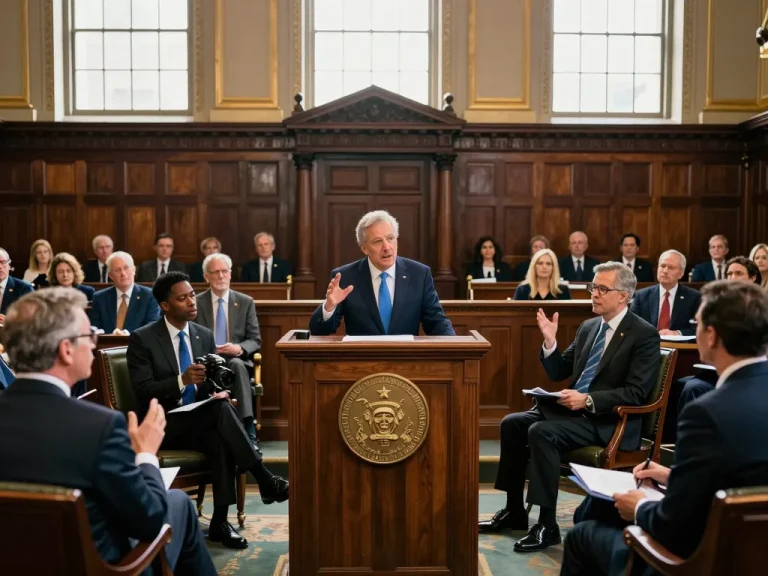










Foundations of Law and Government
The foundations of law and government are critical to understanding the complex interplay between legal systems and the institutions that govern society. These foundations establish the norms and rules that guide human behavior, ensuring justice and order within communities. This section explores the fundamental principles of law, the various legal systems in operation worldwide, and the core tenets of democratic governance.
Understanding the Rule of Law
The rule of law is a foundational principle that asserts that the law applies equally to all individuals, including those in positions of power. It encompasses the idea that laws should govern a nation, as opposed to arbitrary decisions by individual government officials. The rule of law is essential for maintaining order, protecting individual freedoms, and ensuring that justice is served.
Key aspects of the rule of law include:
- Equality before the Law: All individuals, regardless of their status, are subject to the same laws and legal processes.
- Accountability: Government officials and entities must be held accountable for their actions under the law.
- Transparency: Laws must be clear, publicized, and stable, enabling individuals to understand their rights and obligations.
- Access to Justice: Individuals must have access to legal remedies and fair trials.
A prime example of the rule of law in action is the United States Constitution, which establishes a framework for governance that protects citizens’ rights and limits governmental power.
Types of Legal Systems Worldwide
Legal systems worldwide can be broadly categorized into four main types: civil law, common law, religious law, and customary law. Understanding these systems is crucial for comprehending how laws are created, interpreted, and enforced in different jurisdictions.
- Civil Law: Predominantly found in Europe and other regions, civil law systems are based on comprehensive statutes and codes. Countries like France and Germany exemplify this system, where the written law is paramount.
- Common Law: Originating in England, common law relies heavily on judicial precedents and case law. Courts play a significant role in interpreting laws, with the United States and Canada serving as prime examples.
- Religious Law: In some countries, laws are derived from religious texts and principles. For instance, Islamic law (Sharia) governs personal and family matters in countries like Saudi Arabia and Iran.
- Customary Law: In many indigenous communities, customary laws are based on traditions and practices that have been passed down through generations. These laws may coexist with formal legal systems.
Each legal system has its strengths and challenges, impacting how justice is delivered and how rights are protected.
Principles of Democratic Governance
Democratic governance is characterized by a system in which power is vested in the people, who exercise that power directly or through elected representatives. Key principles of democratic governance include:
- Popular Sovereignty: The legitimacy of government derives from the consent of the governed.
- Political Pluralism: A diverse range of political beliefs and parties is essential for a healthy democracy.
- Separation of Powers: Dividing government responsibilities among different branches prevents the concentration of power.
- Protection of Human Rights: Democracies must safeguard individual rights and freedoms against infringement.
Real-world examples of democratic governance include the parliamentary systems in the United Kingdom and the federal systems in the United States, where citizens participate in the political process through elections and civic engagement.
Legal Frameworks and Their Implications
The legal frameworks established by constitutions, statutes, and international treaties shape the governance of nations. Understanding these frameworks is critical for grasping how laws function and their implications for society.
Key Constitutional Provisions
Constitutions serve as the supreme law of the land, outlining the structure of government, the powers of various branches, and the rights of citizens. Key provisions often include:
- Bill of Rights: A specific enumeration of individual rights and freedoms, such as freedom of speech and the right to due process.
- Checks and Balances: Mechanisms that allow each branch of government to limit the powers of the others, ensuring no single branch becomes too powerful.
- Federalism: The distribution of power between national and state governments, as seen in the U.S. Constitution.
For example, the U.S. Constitution’s First Amendment guarantees freedoms concerning religion, expression, assembly, and the right to petition, which are essential for maintaining a democratic society.
Statutory Laws vs. Common Law
Understanding the difference between statutory laws and common law is crucial for grasping how legal systems operate. Statutory laws are written laws enacted by legislative bodies, while common law is developed through judicial decisions and precedents.
- Statutory Laws: These laws are specific and codified, providing clear guidelines and regulations. For instance, laws regarding traffic violations are typically statutory in nature.
- Common Law: Case law evolves through court decisions and can adapt to new circumstances. A notable example is the evolution of tort law, where courts have established precedents that shape liability rules over time.
Both types of law play essential roles in the legal system, often complementing each other to provide comprehensive legal governance.
International Law and Its Enforcement
International law governs the relationships between sovereign states and other international actors. It encompasses treaties, customs, and principles recognized as binding in relations between nations. Key aspects include:
- Treaties: Formal agreements between states that require ratification to be legally binding, such as the Paris Agreement on climate change.
- International Courts: Institutions like the International Criminal Court (ICC) enforce international laws and hold individuals accountable for crimes like genocide and war crimes.
- Customary International Law: Practices that have evolved over time and are accepted as legal obligations, such as diplomatic immunity.
The enforcement of international law can be challenging, as it often relies on the willingness of states to comply. Cases of non-compliance, such as instances of state-sponsored human rights violations, illustrate the complexities involved.
Government Structures and Functions
Government structures define how power is distributed and exercised within a state. Understanding these structures is vital for recognizing how laws are implemented and how governance is conducted.
Branches of Government: Roles and Responsibilities
Most democratic systems are built on the principle of separation of powers, dividing government into three branches: the executive, legislative, and judicial branches. Each branch has distinct roles and responsibilities:
- Executive Branch: Responsible for enforcing and implementing laws. This branch is headed by the president or prime minister, who oversees government operations.
- Legislative Branch: Tasked with creating laws, this branch comprises elected representatives who debate and vote on legislation. In the U.S., this is represented by Congress.
- Judicial Branch: Interprets laws and adjudicates disputes. Courts play a crucial role in ensuring justice and upholding the rule of law.
This separation prevents abuses of power and promotes accountability within government operations. An example is the U.S. Supreme Court, which can check the powers of Congress and the President by declaring laws unconstitutional.
Electoral Systems and Political Representation
Electoral systems play a pivotal role in how citizens participate in governance. They determine how votes are translated into political power, impacting representation at various levels of government. Key electoral systems include:
- First-Past-the-Post: This system awards victory to the candidate with the most votes, commonly used in the U.S. and the UK.
- Proportional Representation: Seats in the legislature are allocated based on the percentage of votes received, encouraging multi-party systems, as seen in many European countries.
- Ranked Choice Voting: Voters rank candidates in order of preference, ensuring that the elected representative has broader support.
Each system has its advantages and disadvantages, influencing voter engagement and the overall health of democracy. For example, proportional representation can lead to more diverse representation, while first-past-the-post may create a more stable two-party system.
The Impact of Bureaucracy on Governance
Bureaucracy refers to the administrative system governing any large institution, typically characterized by hierarchical structures and standardized procedures. While bureaucracy can enhance efficiency and consistency in governance, it also poses challenges:
- Efficiency: Bureaucracies are designed to implement laws and policies efficiently, ensuring that government functions smoothly.
- Red Tape: Excessive bureaucracy can lead to inefficiencies and frustration among citizens, as cumbersome procedures may hinder access to services.
- Accountability: Bureaucratic systems can sometimes lack transparency, making it difficult for citizens to hold officials accountable.
Reforming bureaucratic systems is crucial for improving governance and enhancing public trust. Countries like New Zealand have undertaken significant bureaucratic reforms to streamline services and increase citizen engagement.
Current Issues in Law and Governance
Law and governance face numerous challenges in the contemporary world, driven by social, political, and technological changes. This section examines pressing issues that shape the legal landscape today.
Human Rights and Social Justice Movements
Human rights and social justice movements have gained momentum globally, advocating for the protection of individual freedoms and equality. Key issues include:
- Racial Equality: Movements like Black Lives Matter have highlighted systemic racism and the need for reforms in policing and criminal justice.
- Gender Equality: Advocacy for women’s rights, including the #MeToo movement, seeks to address gender-based violence and discrimination.
- Climate Justice: Activists argue that climate change disproportionately affects marginalized communities, advocating for policies that ensure equity in climate action.
Real-world examples include legislative changes in response to protests, such as police reform bills in various U.S. states following widespread demonstrations against police brutality.
Legal Challenges in Environmental Policy
Environmental policy presents significant legal challenges as governments strive to balance economic growth with ecological sustainability. Key issues include:
- Regulatory Frameworks: Establishing clear environmental regulations that hold corporations accountable for pollution and resource depletion.
- Litigation: Environmental lawsuits, such as those brought by non-profits against governments for failing to meet climate targets, highlight the role of law in environmental advocacy.
- International Agreements: Treaties like the Kyoto Protocol and the Paris Agreement illustrate the complexities of international environmental law.
Countries like the Netherlands have seen landmark cases where courts mandated stricter climate policies, underscoring the intersection of law and environmental justice.
The Role of Technology in Modern Governance
Technology is reshaping governance and law, presenting both opportunities and challenges. Key considerations include:
- Digital Governance: E-governance initiatives enhance public service delivery and citizen engagement through online platforms.
- Data Privacy: Balancing technological advancements with the protection of personal data is a pressing legal issue, particularly in jurisdictions with strong privacy laws like the EU’s General Data Protection Regulation (GDPR).
- Cybersecurity: As cyber threats grow, governments must develop robust legal frameworks to protect infrastructure and personal information.
Countries are increasingly adopting technology-driven solutions to improve governmental efficiency, but challenges related to ethics and privacy remain critical discussions in legal circles.
Future Trends in Law and Government
The future of law and governance will be shaped by ongoing global changes, technological advancements, and evolving societal values. This section explores emerging trends that may redefine legal frameworks and governance models.
Globalization and Its Legal Challenges
Globalization has led to increased interconnectedness among nations, presenting unique legal challenges:
- Cross-Border Regulations: As businesses operate globally, harmonizing laws across jurisdictions becomes essential to facilitate trade and protect consumers.
- Human Rights Standards: Globalization raises questions about the enforcement of human rights in countries with differing legal standards.
- Migration and Refugee Law: Increasing migration necessitates legal frameworks to protect the rights of refugees and migrants, complicating national and international laws.
International organizations like the United Nations play a crucial role in addressing these challenges through treaties and conventions aimed at promoting global cooperation.
Emerging Technologies and Legal Reforms
The rapid advancement of technology necessitates continuous legal reforms to address new realities:
- Artificial Intelligence: The rise of AI poses questions about liability, intellectual property, and ethical considerations in decision-making processes.
- Blockchain Technology: As blockchain gains traction, legal frameworks must adapt to address challenges related to contracts, ownership, and data privacy.
- Telemedicine: The expansion of telehealth services during the COVID-19 pandemic has prompted reforms in healthcare law to accommodate remote consultations.
Governments must proactively engage with technological advancements to create laws that promote innovation while protecting citizens’ rights.
Shifts in Public Policy and Governance Models
Changes in societal values and priorities are leading to shifts in public policy and governance models:
- Participatory Governance: Increasing demand for citizen involvement in decision-making processes is prompting governments to adopt more participatory models.
- Sustainability Initiatives: Growing awareness of climate change is driving policy shifts toward sustainable practices and renewable energy sources.
- Decentralization: Many nations are exploring decentralized governance structures that empower local governments and communities.
These shifts reflect a broader trend toward more inclusive and responsive governance models that prioritize the needs and aspirations of diverse populations.